
 iOS

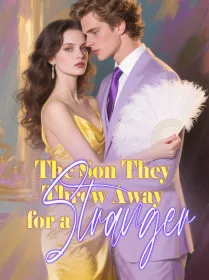
The Son They Threw Away for a Stranger
On New Year’s Eve—my 20th birthday—my parents left me a single boiled egg as a birthday gift and said they had to work overtime. I didn’t question it. I’d long learned not to expect much from birthdays. But as hunger...
Search title — tap to copy, search in the Novelshort app
16
Chapter 1 Preview
On New Year’s Eve—my 20th birthday—my parents left me a single boiled egg as a birthday gift and said they had to work overtime. I didn’t question it. I’d long learned not to expect much from birthdays.
But as hunger gnawed at me, I sneaked out to buy a pack of instant noodles from the convenience store nearby. On the way, I passed by a luxury restaurant—and froze. Through the grand glass windows, I saw my parents. They weren’t working. They were celebrating a boy’s birthday.
They had booked the entire place. The boy wore designer clothes, smiling proudly as he accepted warm wishes from dozens of classmates. My parents arrived in luxury cars, escorted by a private driver.
For him, they’d prepared lavish gifts: the keys to a villa, a gleaming supercar parked outside, and a bank card loaded with 100,000 dollars.
Dad patted his head and beamed with pride.
“Good boy,” he said. “Once you graduate from college, the entire group will be yours to manage.”
Mom wrapped her arms around him, tears brimming in her eyes.
“Even though you’re adopted, we’ll love you more than any real son. Everything we own will be yours.”
I stood outside, dumbfounded, the cold biting at my skin. I tried to walk closer, to understand. A bodyguard noticed me and shoved me hard. I stumbled, tried to explain, but before I could say a word, he punched me and threw me out like garbage.
The egg I had held carefully all day—my only birthday gift—fell from my hand, rolled across the pavement, and was crushed underfoot. Just like that, the thin thread connecting me to my parents snapped.
——
I lay on the cold ground, my face smeared with dirt, my limbs aching. I wanted to scream, to cry, to ask “why?”—but my voice caught in my throat.
Then I heard laughter.
My parents came out with the boy, still holding his hand. They looked in my direction and laughed.
“Charles, look at that little beggar,” Dad said with a chuckle. “If you don’t work hard, you’ll end up just like him.”
“That’s right,” Mom added, looking me dead in the eyes. “That bastard will always be beneath you.”
They didn’t recognize me. They didn’t know I was their real son.
Charles—Charles Pierce—was my classmate in college. He noticed me and gave a smug, pitiful smile.
“Don’t worry, Mom and Dad,” he said sweetly. “I’ll do my best to make you proud.”
Bastard.
Beggar.
Each word sank like a blade into my heart.
I picked up the broken egg, shoved it into my mouth, swallowed it, and turned away in silence. My steps felt like lead. A tenminute walk home stretched into eternity.
My home, as always, was dark and cold. No TV, no refrigerator, no microwave. All the furniture was salvaged from the garbage.
Dad worked as a laborer. Every evening, his hands came home bloodied and raw. I still remember when I was in first grade, a steel beam fell on my arm. It swelled into a deep purple bruise, but he kept working. I had hidden in a corner that night, crying until my face was soaked.
From that moment on, I knew I couldn’t rely on anyone. I had to grow up fast.
We were so poor that I borrowed money to stay in school. At night, I went to construction sites, picking up discarded nails and scrap to sell. Once, I was caught and beaten nearly unconscious.
There were toys I loved, but I could only look at them through store windows. That was enough. Pretending I owned them was my only comfort.
In college, I worked countless parttime jobs to pay my tuition. I wore the same clothes for years, mending them with fabric scraps I scavenged from garment factory dumpsters.
I got used to the looks—those mocking stares from classmates.
When I saw the girl I liked, I would walk the other way, afraid that even my shadow might stain her.
My parents used to cry in front of me, saying, “Son, we’re sorry. We’re poor. We’ve failed you.”
But now I know the truth. It was all a performance.
The ones I respected the most were nothing more than actors in a cruel play.
They were rich. CEOs.
They gave me a life of suffering while handing the golden world to a stranger.
I let out a bitter laugh, threw my filthy clothes in the trash, and took a long, scalding shower.
That night, my parents came home late, assuming I was asleep. They tiptoed inside, only to freeze in place.
I was sitting silently in the living room, waiting.
“Son, why are you still awake this late?”
My mother, Margaret, sat beside me on the old sofa, her face full of what looked like concern, softened by a gentle smile.
I answered casually, “Why were you working overtime so late on New Year's? I stayed up waiting for you both to come home.”
My parents shared a quick glance—guilt flickered briefly across their faces. Then, trying to change the subject, my father, Robert, placed a worn plastic bag on the table, smiling as if everything were normal.
“William, it’s good you’re still up. Dad brought back some cake—perfect timing to celebrate your birthday.”
I looked at them flatly. The polished, expensive clothes they had worn earlier were gone. Their faces were pale and tired again, their branded coats replaced by the patched work uniforms I had known all my life.
Dad reached into the bag, which reeked of rotting vegetable leaves, and pulled out a small, dirty slice of cake. It was clearly something discarded by someone else. He held it out to me like a precious treasure.
“Son, it fell on the ground, but it’s still edible. Take it, eat it—it’s sweet.”
When I was younger, they gave me a single boiled egg every birthday. If they had ever brought me cake, even one picked out of a trash can, I would’ve considered myself the luckiest boy alive.
But now I couldn’t help but wonder—was this cake leftover from the one they had with their “dearest son”? The one they gave the villa, the car, the bank card? Had they dropped it and thought, Hey, can we give the scrap to William?
My chest tightened. I tried to keep my hands from shaking, but the ache in my heart had already spread through my body.
I gently pushed the cake back toward him.
“Dad, you should eat it. I already had an egg. You’ve both never had good food yourselves—this cake should be yours.”
I turned to my mother. “Especially you, Mom. You gave birth to me after ten months. My birthday should be a day to honor you. Give it to her.”
They exchanged another glance. For a second, they froze. Though they quickly recovered, I caught it—that faint trace of impatience. Even disgust.
I pretended not to notice. But the pain inside me grew heavier.
My biological parents could give their own son cake scraped off the ground, but serve a towering ninelayer cream cake to a stranger—an adopted son.
Dad’s voice trembled. “This is all my fault. I’ve failed you. I couldn’t even afford a proper cake for your birthday.”
Mom held his hand, her tears falling quietly. “You’ve already done your best.”
Watching them act, repeat the same pitiful lines, I felt numb. I picked up the cake. Without a word, I stuffed the muddy slice into my mouth and chewed slowly.
“Mom, Dad… the cake is sweet.”
Tears pressed against my eyes, but I didn’t let them fall. My heart had long shattered into pieces.
They both sighed with relief when they saw me eat.
“Our son has really grown up,” they said with a smile.
The irony was too much. I almost laughed.
Then my father suddenly leaned forward, squinting at my face. His expression changed.
“What happened to your face? Who hit you?” he asked sharply.
“Who would dare lay a hand on my son?” He rolled up his sleeves. “I’ll fight them to the death!”
For a moment, I saw a glimpse of the man I once admired.
I remembered elementary school—how I was bullied for being poor. How classmates stomped on my arm until it swelled.
Dad had marched over to confront their parents. He was beaten black and blue, but still forced them to swear they wouldn’t touch me again.
Back then, he was my hero. Other kids admired celebrities—I only admired my dad.
But now? The same father who stood here fuming in false rage had just let his bodyguard beat me until I was bruised and bleeding—without lifting a finger.
I swallowed the bitterness in my chest and smiled faintly.
“No one hit me. I fell.”
Mom hugged me tightly, her voice trembling.
“Be careful next time. You’re a part of me. When you hurt, I hurt too.”
And just like that, their performance continued.
But this time, I wasn’t watching as a son.
I was just a stranger sitting in their home, finally seeing the truth behind the curtain.
Seizing the moment, I said,
“Mom, Dad, didn’t I give you my scholarship money a few days ago? Can you return it to me? I need it to pay for my study abroad.”
Both of them froze in place.
Dad hesitated, then gave a strained smile.
“Son, what’s so great about going abroad? Why are you chasing foreign dreams? Isn’t it better to stay in America, close to your parents?”
He paused, then continued, “We’re just holding onto the money for you—for your own good. It’s not safe for someone your age to manage that much cash.”
Mom quickly added,
“Your dad is right.”
“You’ve been working parttime, haven’t you? Isn’t that enough to cover your expenses?”
“I also heard you have a girlfriend. Is she the one encouraging this? Son, don’t be misled by someone like that. I advise you to break up with her now, before you get hurt.”
They both looked at me with an air of selfrighteous concern, as if they were doing everything for my sake. But their words pierced deeper than any knife.
That money wasn’t just a number. It was everything I had worked for—every sleepless night, every laborious shift, every skipped meal. I handed it to them, believing they had my best interests at heart.
I remembered Charles, swaggering around campus in designer clothes, getting picked up by private drivers, hosting parties in lavish villas. He once bragged in front of the whole class about spending over 100,000 dollars in a single evening.
Meanwhile, I—struggling to reclaim my hardearned scholarship—was being lectured, as if I were asking for a favor.
In that moment, the truth burned inside me. Charles, their adopted son, was treated like royalty. And me, their real son—I was disposable.
They even wanted me to give up on the only person who cared about me.
Throughout college, I was “the poor kid.” People kept their distance. No girl ever paid attention to me—except for Emily Young. She, too, came from a humble background. We understood each other without speaking. We hadn’t labeled our relationship, but we already saw each other as partners in life.
I forced a weak smile, hiding the heartbreak.
Dad reached out and patted my shoulder.
“Don’t think too much, son. You know how tight money is for our family. It’s better if we help manage your finances.”
Mom nodded along.
“Besides, your past tuition was all on borrowed money. We still have debts to pay. Just focus on your studies and rest early—don’t let stress ruin your health.”
I nodded, my face blank, and returned to my room, feeling empty.
But just as I closed the door, I heard Dad’s phone ring.
There was a pause, then hurried footsteps.
I stepped quietly to the wall and listened. They had rushed into the bathroom, speaking in hushed voices.
“Charles, why are you calling now?” Dad whispered. “Didn’t I tell you not to contact us when we’re at home?”
“Dad, I need more money.” Charles’s tone was cold and impatient.
“But didn’t I just give you a card with 100,000 dollars?”
“It’s gone. I threw a birthday party, ordered a few bottles of red wine, and now I’m out. I need another 100,000.”
Dad hesitated, clearly torn, but Mom nudged him firmly.
“What are you waiting for?” she hissed. “Charles isn’t William. Even if he wants 500,000, we should give it. He’s the future heir of the Pierce family.”
“Think about it. He’s smart, wellspoken, and presentable. That’s why we adopted him—to carry the family legacy.”
“And look at William,” she sneered. “That scar on his face from the fire? He’s not fit to represent the family in public.”
Dad paused, then chuckled with affection.
“You’re right. Okay, I’ll transfer the money to Charles now.”
Behind the door, my body turned cold.
Their voices blurred in my ears, but one truth rang clear.
I was never meant to have anything more than the crumbs.
Hearing those words, my heart felt like a pile of cold ashes. I couldn’t bear to listen any longer.
I returned to my room and stayed awake the entire night, my mind spinning with what my parents had said in the bathroom.
They must have forgotten how the scar on my face came to be.
When I was five, they locked me inside the house while I was asleep so they could take Charles to an amusement park.
They left without realizing the gas stove was still on, boiling water. The pot boiled dry, causing an explosion that sent sparks flying onto the curtains.
That day, I woke up to thick smoke, coughing and terrified, curled up on the balcony, screaming for help.
If not for our neighbor who rushed over to save me, I might have died in that fire.
But when I escaped the blaze, flames had already burned the side of my face. The scar has remained ever since.
Because of it, I was mocked endlessly by classmates—called ugly, freakish.
What hurt even more was that when my parents came home, they assumed I’d caused the fire myself by playing with matches.
They beat me mercilessly, even though I was trembling with fear.
It wasn’t until the police investigated and confirmed it was their negligence that they reluctantly stopped.
Fifteen years have passed. They never apologized once.
And now, it no longer matters.
The next morning, my phone rang—it was my girlfriend, Emily.
“You’re downstairs at my house?”
I leapt from my blanket, threw on my clothes, and rushed down.
Seeing Emily made the ice around my heart melt just a little.
“Why are you here on New Year’s Day?” I asked.
Her smile warmed me. I brought her inside just as my parents were getting ready to go out.
But when they saw her, both froze in place.
My mother looked Emily up and down, surprised.
“Son, is this… your classmate?”
I nodded. “Emily—my girlfriend.”
Emily greeted them sweetly, “Happy New Year, Uncle, Auntie.”
While I went to get her a glass of water, I noticed my mom whispering something to my dad in the kitchen.
Curious, I moved closer to eavesdrop.
“Dad, that girl is beautiful,” Mom said in a hushed voice. “Why don’t we introduce her to Charles?”
Dad frowned. “She’s our son’s girlfriend. How can you say that?”
Mom waved it off. “Both of them are our sons—flesh of our flesh. What’s the difference?”
“William’s health is poor, and he has that scar. He’s not a good match for her. Charles is handsome and polished—they’d look perfect together.”
“In any case, I like that girl. She has to marry Charles.”
Dad looked uncomfortable, but said nothing more.
I quickly stepped away, pretending I hadn’t heard anything, and returned with the water.
My hand trembled as I handed the glass to Emily.
I wasn’t sure if it was from anger or the growing disappointment that churned inside me.
I couldn’t understand it—why would my own parents try to steal their biological son’s girlfriend for an adopted son who shared no blood with them?
The last warmth I held in my heart cracked and shattered.
I didn’t want to stay home any longer. I took Emily’s hand, intending to take her out to see a movie.
But my mother stopped us, smiling warmly.
“Where are you two going? Stay for lunch.”
I was about to decline, but Emily quickly accepted, eager to make a good impression.
Lunch that day was the most extravagant I’d ever seen at our house—dishes I’d only dreamed of growing up.
During the meal, my mother suddenly suggested shopping with Emily.
When I offered to join them, she smiled and said,
“Why would you come? Let us women shop on our own.”
My father added,
“Son, just stay and help out. It’s New Year’s—relatives will be coming and going all day.”
I nodded reluctantly.
That night, my phone rang. It was Emily, her voice panicked:
“William! Help me! I’m at City KTV, Room 303!”
Without thinking, I ran straight there. The moment I pushed open the door, I saw Charles trying to force drinks on her.
I stepped in and pulled her behind me. Charles looked me up and down and smirked.
“Well, look who it is—the broke loser. What are you doing here? Playing hero?”
I didn’t respond. I just grabbed Emily’s hand and turned to leave. But then he dropped a bombshell that made me stop in my tracks.
“You know who came up with the idea to get her drunk and ‘seal the deal’? Our parents.”
That word—our—hit like a slap. Everyone in the room froze.
I was dressed plainly, shoes scuffed, my coat worn thin. He wore headtotoe designer brands. The contrast couldn’t have been starker. Yet he’d just called me “brother.”
In that moment, all I felt was a deep, numbing anger.
My own parents… would scheme something like this?
Charles stepped closer, a twisted smile on his lips.
“You disgusting freak. Even your own parents can’t stand you. Just disappear, why don’t you?”
“I’m up here,” he sneered, gesturing to himself, “and you? You’re crawling in the dirt. If both of us were in trouble, want to bet who they’d save?”
I thought he was just bluffing. But seconds later, the door burst open.
A group of men in black stormed in.
Charles froze.
“Who are you?!”
They didn’t answer. Without a word, they grabbed us both, tied us up, and shoved us into a van. One of them turned to Emily.
“Go home. Tell his parents.”
When they finally removed our hoods, we were at an abandoned construction site. Charles’s face was pale. Our hands and feet were tied to chairs.
A masked man paced in front of us, chuckling.
“Charles, you love flaunting your money. We’ve been watching you for a while.”
He raised a phone, recorded a quick video of us, then made a call.
“Mr. and Mrs. Pierce,” he said coldly, “we’ve got both your sons. Be smart—pay the ransom. Don’t call the police unless you want two corpses.”
The moment my parents saw the video, their act dropped. My mother’s voice shook:
“Please don’t hurt them! How much do you want? We’ll pay!”
Before the kidnapper could answer, Charles burst into sobs.
“Mom! Dad! Help me! I’m scared!”
I tried to speak, to shout, but his crying drowned me out.
Then the masked man said flatly,
“Five million per person. You’ve got thirty minutes. No delays. Or you’ll be identifying bodies.”
My parents panicked.
“Please don’t kill them! We’ll give you the money! But… five million each is a lot. Can’t you let both go for five million total?”
The kidnapper laughed coldly and looked between us.
“I’ve been watching both your sons. One of them lives lavishly, spends money like it’s air. The other looks like a ghost, juggling two jobs just to survive. You clearly favor one.”
“So I’ll make it easy. Five million—choose one.”
Dad hesitated, visibly torn. I could hear my mother’s voice faintly through the phone, whispering urgently.
“The company’s cash flow is tight. We can’t pull out ten million that fast. Let’s just rescue one first. I don’t think they’ll really kill the other.”
Although her words were quiet, Charles and I heard them clearly.
A flicker of hope sparked in my chest.
Charles panicked and immediately pleaded,
“Dad, Mom! Save me! Save me first! You love me—please, you have to choose me!”
The kidnapper didn’t give them much time to think. He started counting.
“Three...”
“Two...”
With each count, my hope surged. Deep down, I wanted to believe they'd choose me. I was their real son. Surely, they wouldn’t abandon me.
But just as the final second came, both of them spoke in unison:
“We choose Charles!”
The words hit me like a bolt of lightning. My mind went blank.
The kidnapper gave a knowing smirk.
“Alright. Go prepare the money. You’ve got thirty minutes.”
My parents quickly agreed, then made a request.
“Can we speak to William privately for a moment?”
The kidnapper allowed it, assuming they wouldn’t dare try anything with both sons in their hands.
They held the phone to my ear. I wanted to call them “Mom” and “Dad,” but my throat locked up.
Then my father’s voice came through gently.
“William, don’t be afraid. They won’t hurt you. Once we pay, they’ll release you both. You’ll be home safe.”
My mother chimed in.
“Your dad’s right, son. Be strong. We’ll definitely bring you back.”
Tears welled up in my eyes.
Even in their words of comfort, it was obvious: in their hearts, Charles mattered most.
In the end, I lost to him—again.
They couldn’t risk Charles’s life. They gave him the money without hesitation. But with me, they were gambling, betting the kidnappers wouldn’t actually follow through on their threats.
Choking on emotion, I responded,
“Dad... Mom... your duty of raising me ends here in this life.”
They both froze, panic rising in their voices.
“Son! Don’t say that—what nonsense are you talking about? You’ll be fine—”
Before he finished, I nodded at the kidnapper to take the phone away. He paused, looked at me, and in his eyes, I saw something unexpected—pity.
Half an hour later, the kidnappers confirmed the ransom had arrived.
They masked Charles, shoved him into a van, and drove off. I was left behind.
My parents, relieved, asked through the phone,
“What about William? Is our other son okay?”
But instead of a response, what they heard was a loud, earsplitting gunshot.
Share
Related Novels


More Hot Novels


Search this title in the Novelshort app
At a glance
The Son They Threw Away for a Stranger
- Genre: Betrayal · Hot · Rejected
- Chapters covered: 1 preview on this page
Discovery page — full story on partner platforms. Some links may be affiliate referrals.